
Western Australia
Search Western Australia
unclaimed money.
Search all official registers and databases to find money that may be owed to you.
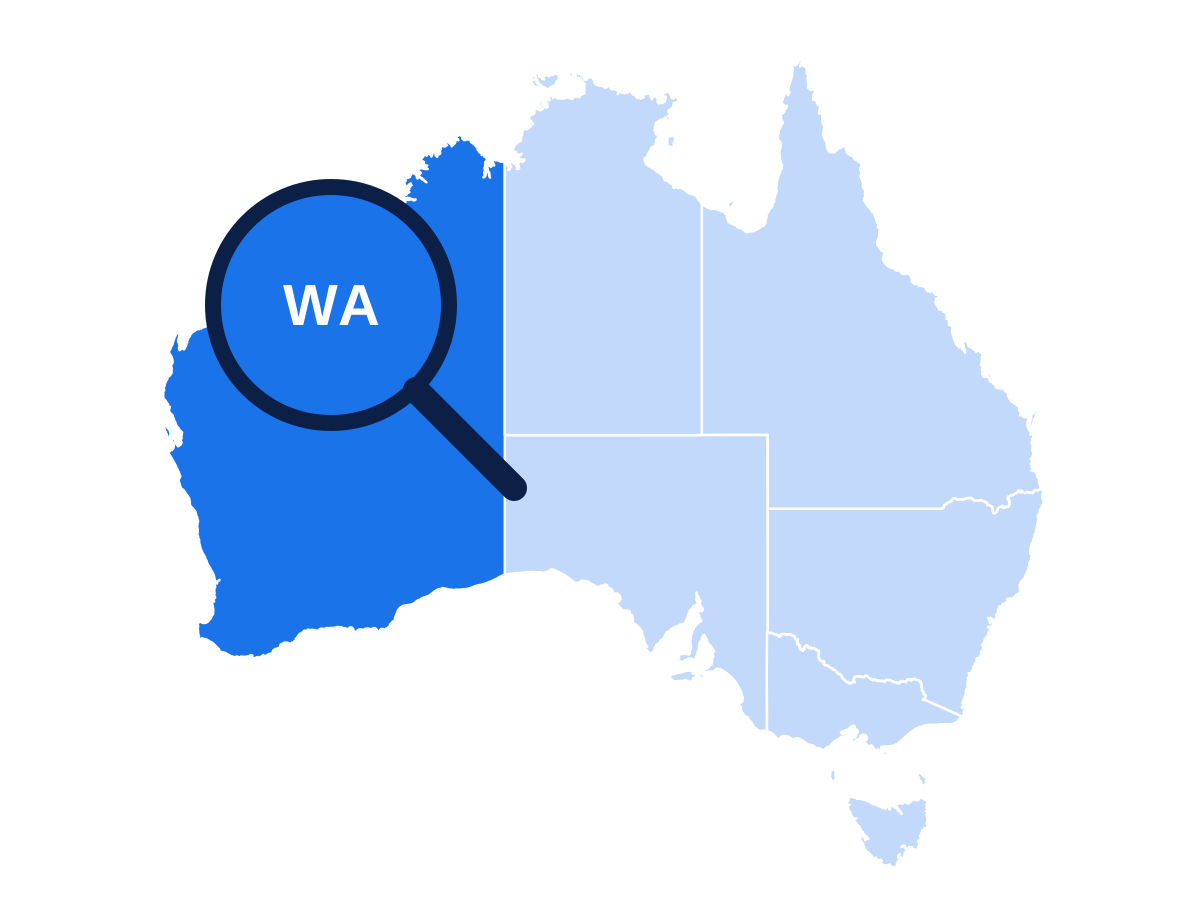
Searching official registers is free. Previous names and addresses may assist your search.
Lived in more than one state? Build a search planHow to claim unclaimed money in Western Australia
WA unclaimed money is held by the Department of Treasury under the Unclaimed Money Act 1990. Money an organisation has held for six years without returning it must be handed to Treasury, where the record is kept until someone claims it. Here is how the WA claim actually works, and what Treasury asks you to provide.
- 1
Search the WA Unclaimed Money Register
Accept the search terms, then search by name. The register is updated each year and includes things like rental bond refunds, dividend payments, vehicle licence refunds and utility overpayments. Super, life insurance and dormant bank accounts are not on this register, so check the national ones separately.
- 2
Check who is actually holding the money
If the listing shows Treasury holds the money, use the Make a claim button. If it shows another organisation, you deal with that organisation directly rather than with Treasury.
- 3
Choose your claim type
Treasury has separate paths for an individual, an organisation or business, an enduring power of attorney or trust, a deceased estate, and an agent claiming for someone else. Picking the right one decides which documents you are asked for.
- 4
Get your documents certified
Every supporting page must be certified as a true copy by an authorised witness who has seen the original and is not you. Treasury lists JPs, MPs, accountants, lawyers, doctors, chemists, police officers, teachers, nurses, postmasters, public servants and marriage celebrants. Digitally signed forms are not accepted.
- 5
Lodge online and nominate your bank account
Complete the online identity check and nominate an account for direct payment. A paper statutory declaration is available if you prefer, posted to Department of Treasury and Finance, Locked Bag 11, Cloisters Square, Perth WA 6850, but Treasury says online claims are processed faster.
What you need to prove
- Certified proof of identity
- Your bank account details for direct payment
- Evidence connecting you to the addresses and payers linked to the listed money
- Certified copies only, witnessed by an authorised person who sighted the originals
- Deceased estate: certified grant of probate or letters of administration, the will, and the registered death certificate
- Business: certified proof of your association with the organisation, plus a certified authorisation naming you
Fees and timing
- Cost to search or claim
- Free. Treasury does not charge a fee to search the register or lodge a claim.
- Processing time
- Treasury currently advises that correctly submitted claims may take around 90 days to review and process. Claims with incomplete or uncertified documents take longer.
- How much has to be owed
- The Act deems amounts of $100 or more to be unclaimed money. Treasury also accepts smaller amounts as a voluntary transfer, so amounts under $100 can still appear.
- How long records are kept
- Treasury states records are held until the funds are successfully claimed. The register holds roughly $190 million.
Claiming in less common situations
A deceased relative
The person named in the grant of probate, will or letters of administration claims, or a named beneficiary can claim their share. Treasury asks for certified copies of those documents plus the registered death certificate. If you do not know who the executor is, Treasury directs you to the Public Trustee or Probate Office in the state where the person died.
A business or company
An authorised person of the organisation lodges the claim, with certified proof of their association and, where the business changed name, ownership or ceased trading, documents evidencing the entitlement.
Someone claiming for you
An agent must supply a certified copy of a signed authority from you. An enduring power of attorney or trustee supplies a certified copy of the EPOA or trust agreement.
Money not held by Western Australia
A state register only covers money handed to that state. Some of the most common types of lost money are held nationally instead, so check these separately:
- Lost and unclaimed super: held by super funds or the ATO. See how to find lost super.
- Dormant bank accounts, shares and life insurance: generally transferred to ASIC. See national searches.
- Money from another state: if you have lived or worked elsewhere, search that state too. Use the Search Plan to list them.
Searching with old addresses
- Write down every address you have had, including share houses and student housing.
- Search by name first, then use the suburb or postcode shown in a result to decide if it could be yours.
- Try maiden names, previous surnames, initials and common misspellings.
- Old bills, bank statements, tax records or tenancy papers can help prove you lived at a listed address.
- Only enter details on the official government website, never on a site asking for fees to search.
About Western Australia unclaimed money
Western Australia's unclaimed money is held by the Department of Treasury. It includes money from businesses, government agencies, trusts and other organisations that could not be returned to owners.
WA residents should also check ASIC MoneySmart for bank accounts and shares, the ATO for lost super, the Bond Administrator for rental bonds, and Fair Work for unpaid wages. If you have lived in other states, search those registers too.
Quick facts
- The WA Department of Treasury holds the state register.
- Rental bonds are handled by the Bond Administrator.
- Search by every name and address you have used in WA.
The official searches linked on this page do not charge a search fee. Check the responsible agency's current claim instructions before providing documents or paying for outside help.
Check everywhere
Search all key places where money can be held.
Department of Treasury WA
Search the Western Australian Unclaimed Money Register for cash, accounts, wages, bonds, shares and more.
MoneySmart (ASIC)
Search for unclaimed bank accounts, shares, investments and life insurance.
ATO Lost Super
Find your lost or forgotten superannuation and unclaimed super.
Fair Work Ombudsman
Search for unpaid wages owed to you by employers that is being held in trust.
AFSA Unclaimed Money
Find unclaimed money from bankruptcy, debt agreements and wind-ups.
Before you search
Having these details on hand makes it easier to recognise a match on the official register.
How it works
Search
Search the official registers.
Match
If a match is found, the official register will show you the available details.
Claim
Follow the instructions to claim your money.
Frequently asked questions
Need help?
We’re here to help you every step of the way.
What to search next
Money goes missing in more than one place. These are the next things worth checking.
- Lost superSuper left behind at old jobs, plus super the ATO is holding for you.
- National registersMoneySmart, the ATO, Fair Work and AFSA cover every state.
- Step-by-step guidesHow each type of unclaimed money works and how to claim it.
- Other states you have lived inEach state keeps a separate register, so search them all.
Searching is free. Every register we link to lets you search at no cost, and you can lodge a claim yourself. Be cautious of any business that asks for an upfront fee simply to search a public register on your behalf. Find Lost Money Australia is an independent information service. We are not a government agency and we do not hold or search unclaimed money databases.